Lucian Freud and Are Among the Leading Figure Painters of the Contemporary Art World
What is Contemporary art? And how would you define a contemporary artist?
Related articles: 15 Contemporary Blackness Artists Everyone Should Know About - Oil Painting: Different Artists & Unique Techniques - Top 10 Near Expensive Paintings E'er Sold At Auction
The loose, simple definition is: art that has been made in the present day or in the relatively contempo past. Still, the term gimmicky art indicates more than that. Before delving into it, it is necessary to understand the difference betwixt contemporary art and its previous artistic period: Modern art.
The fact that "contemporary" and "modern" in colloquial English are synonyms does not aid. In fact, it oft leads to confusion and conflation of the terms mod fine art/artists and contemporary art/artists. In the art world, these ii terms refer to two distinct times of cosmos and to very different scopes and approaches to art product. The term Modernistic Art describes fine art fabricated from effectually the 1860s to the 1970s. In this period, art started breaking rules and traditions as well every bit embracing experimentation with different materials. Modern artists developed a new mode to intend fine art, moving away from figurative fine art towards abstraction.
There is no definitive understanding on when contemporary art started. For many, the cut-off period marking the stop of Mod Art, and so the starting time of contemporary art, is identified with the birth of Postmodernism in the 1970s. Rejecting a uniform organising principle or characterization, contemporary art is eclectic and various. Contemporary artists commonly piece of work with unlike materials and methods likewise as with a variety of concepts and subject matters that challenge the boundaries of what art and an artwork can exist. In comparison to Modern Art and other historical art periods, contemporary art lacks a shared idea and vision as well as unified modes of expression: contemporary artists continue to experiment, question and re-evaluate the notion of art itself. Notwithstanding the wide telescopic of gimmicky fine art, in that location are some mutual themes that are typical of contemporary artworks. The topics explored by gimmicky artists very frequently reflect relevant and heated issues that define our society, such as engineering science and the digital world, identity politics, the body, globalisation and migration, time and memory. Another important element of contemporary fine art, which actually differentiates it from modernistic art, is the relevance given to the viewer's experience of the artwork. Gimmicky artists often center their works on the effect that they can have on the viewer. Art is non anymore about the "genius" artist behind it, or well-nigh the artwork's beauty and class. Fine art now has dissimilar forms, sometimes ephemeral ones (such as performance art or street art) and lives outside conventional spaces.
41 Influential Gimmicky Artists
The aim of this list is to give a good comprehensive overview of the variety of forms of creative expression found in contemporary art. The artists have been selected not only for their influential and groundbreaking contributions, but also as exponents of the prolific creative movements and trends that characterise gimmicky fine art. The list reflects a loose ranking, with the well-nigh influential artist at number one. The ordering is based on the impact of the artists' contributions in the art world and in our culture, every bit well as on their value on the the market place. So, stick until the end to know which artists are shaping gimmicky art!
41. Anselm Kiefer
b. 1945 in Donaueschingen, Germany
Anselm Kiefer is a German sculptor and painter, who creates monumental works using unusual materials, such as ash, shellac, pb, straw, and glitter. These pieces often allude to collective memory and controversial facts from our history, such as the Nazi rule, literary works, mythology, as well as historical figures the artist admires. In his work, Kiefer aims at against his civilization'due south dark by.

forty. JR
b. 1983 in Paris, France
JR is a French street creative person and photographer, who is all-time known for his large black and white photographs flyposted in public places. His art comes from activism. While in his works he focuses on local and physical issues, he always has a wider universal picture in mind, a strong (and idealistic) belief in the good of humanity. Among JR'southward most important projects we find: Face 2 Confront, in which he pasted on the West Bank barrier portraits of Palestine people side by side to Isreali people to fight against prejudices; Inside Out Project, which inspired people all around the world to utilise photographic portraits to characterize untold stories of their communities; and Women are Heroes, in which he highlighted the strength and resilience of women in the places with the highest rates of social distress.

39. Hito Steyerl
b. 1966 in Munich, Federal republic of germany
Hito Steyerl is a filmmaker, moving image artist and innovator of the essay documentary. She is interested in engineering, the global circulation of images, and, in item, in the effect that those images have on our society. She is primarily known for her video works which oft push the boundaries of filmmaking every bit such and are soaked in conceptuality. Steyerl's works could exist seen in prominent biennials including the ones in Venice, Istanbul and Shanghai. Her films are rich, mixing fiction and facts, computer-generated images and documentary footage. They explore heated issues of our time, amidst them militarisation, surveillance, corporate domination, alienated labor, but also protest culture and the ascension of culling economies. This dense political content is commonly combined with appealing popular artful and witty sense of humour.

38. Njideka Akunyili Crosby
b. 1983 in Enugu, Nigeria
Njideka Akunyili Crosby creates compelling large-scale figurative compositions, drawing from political, art historical and personal references. She depicts familiar everyday scenes and social gatherings, in what appears every bit a quiet and pensive way. Her works are densely packed with reflections on postcolonial life and the urgency of the issues of global migration.

37. Mark Bradford
b. 1961 in Los Angeles
Mark Bradford is a contemporary creative person working primarily with brainchild. He is known for grid-like, large-scale artworks combining paint with collage, incorporating items of his daily life such equally remnants of found posters or business cards. In his work, Bradford explores social and political problems such equally marginalisation of communities and of vulnerable populations by those in ability. He describes his styles equally "social brainchild". His concluding series "Quarantine Paintings" reflects on creativity in isolation and on the purpose of art in this complex time of societal indetermination.

36. Wolfgang Tillmans
b. 1968 in Remscheid, Germany
A unique and sensitive observer of our earth, Wolfgang Tillmans is a German language photographer working with photo-reportage, portraiture and large-scale brainchild. In his work, Tillmans constantly pushes the boundaries of the medium, creating a compelling and varied trunk of work. In 2006, he was the first non-British person to receive the prestigious Turner Prize. Tillmans' works speak to the viewer, as the artist himself explained: "I want the pictures to be working in both directions, I accept that they speak about me, and even so at the aforementioned time, I want and expect them to function in terms of the viewer and their experience."

35. Olafur Eliasson
b.1967 in Copenhagen, Denmark
The Danish-Icelandic gimmicky creative person Olafur Eliasson is widely known for big-scale, site-specific art installations that make use of h2o, light and air temperature to create an immersive viewer's experience. The major themes of his body of piece of work are our human relationship with nature, specially now in the current climate emergency, and human perception. His about famous works are: The Weather Project (2003), a behemothic artificial sun installed within the Tate Modernistic in London; and Ice Lookout man (2019), huge ice blocks left to melt in major cities, aiming to raise awareness about the climate crisis.
Read more than about Eliasson'due south latest exhibtion at Fondation Beyeler.

34. Luc Tuymans
b. 1958 in Mortsel, Belgium
Luc Tuymans is a Belgian figurative creative person. His sparsely-coloured, mysterious and muted paintings explore the human relationship between memory, history and people. He draws inspiration from film and tv images that he translates with quick brush strokes and re-contextualises into paintings. He works with soft palettes of browns, whites and greys, creating blurred, emotional and haunting compositions. Tuymans investigates cultural retentivity and people's ability to ignore information technology, and thus, he depicts primarily historically meaning people and places.

33. Shirin Neshat
b. 1957, in Qazvin, Iran
Shirin Neshat is a visual artist, working with photography, video and film. In her artworks, she explores the human relationship between women and the Islamic cultural and religious system of values. In particular, her aim is that viewers "take away with them not some heavy political argument, simply something that actually touches them on the most emotional level".

32. Banksy
b. 1974 in Bristol, Uk
Banksy is the pseudonym of one of the nearly famous street artists and political activists, whose identity is only known to his family, his closest collaborators and a handful of fellow artists. Banksy'due south artistic practice includes urban interventions and illicitly hung artworks in museums. His art is provocative, witty and irreverent. Through his street art and installations, he usually criticises consumerism, capitalism, political authority and the art world. He is also famous for having shredded his artwork "Girl With Airship" immediately after it was bought at a Sotheby'southward auction in 2018. The shredded artwork, now "Love Is in the Bin", has been re-sold for $25.4 million.
Read more about Banksy

31. Ana Mendieta
b. 1948 in Havana, Cuba. Died in 1985
"Through my earth/torso sculptures, I become one with the earth ... I become an extension of nature and nature becomes an extension of my trunk." This is how Ana Mendieta described her own art. She worked with photographs and video footage of her body immersed and camouflaged in a natural environment. Her works offer an interesting look on the relationship betwixt the female person body and landscape.

30. Ai Weiwei
b.1957 in Beijing, Communist china
Considered "China's dissident artist", Ai Weiwei has gotten in trouble multiple times for being openly critical towards his country's government. His studio has been destroyed, his passport confiscated, and he himself was also arrested. Nevertheless, that never stopped him from making meaningful artworks commenting on human rights and commonwealth as well equally openly criticising the Chinese Authorities. Ai Weiwei's oeuvre is provocative and controversial. His vivid artwork, "Dropping a Han Dynasty Urn", where the artist smashed ii precious artifacts from the Han Dynasty, shocked the fine art globe.
Read more well-nigh Ai Weiwei

29. Tracey Emin
b. 1963 in Croydon, United kingdom of great britain and northern ireland
Tracey Emin'due south works are deeply autobiographical and confessional. Her do includes cartoon, paintings, moving picture, photography, sculpture and sewn appliqué. Emin expresses timeless themes such as love, loss and grief in an intimate, visceral and honest manner. "The almost beautiful thing is honesty, even if it'south really painful to wait at", Emin remarked. In her famous artwork "My Bed", the artist displays a bed with bodily secretions stain and messy sleeping accommodation objects such every bit condoms, underweres, that were inspired by Emin depressive even so sexual phase when she remained in bed for 4 consecutive days drinking only booze. The installation gained a lot of media attention, causing a furore.

28. Liu Xiaodong
b. 1963 in Jinzhou, Red china
Liu Xiaodong tin be described as the chronicler of modernistic life. 1 of the well-nigh prominent figures within the Chinese Neo-Realist group in the early 1990s, he often paints en plein air, exploring and documenting the developing economy of China. His style is characterised past loose, thick brushstrokes that, on the one manus, maintain a loftier degree of realism, and, on the other, emphasise the abstract nature of the medium. Xiaodong depicts scenes of everyday life. In item, as the creative person said: " When I paint someone, I want to capture their surround, their living state. I want to show the personal story backside the epitome of the person."

27. Takashi Murakami
b. 1962 in, Itabashi City, Tokyo, Japan
Takashi Murakami'due south "superflat" aesthetic is widely recognised. The artist has drawn from traditional Japanese painting and pop culture to create a distinctive colourful and bi-dimensional style. His oeuvre comprises paintings, sculptures, prints and even merchandise and collectibles. These include repeated motifs such as smiling flowers, cartoon characters (Mr. DOB), and animals.

26. Sean Scully
b. 1945 in Dublin, Republic of ireland
One of the most influential abstract artists of his generation, Sean Scully is famous for his filigree-like paintings, consisting of brushy layers of brightly coloured stripes and squares. Scully's artworks are inspired past the artist's memories of objects and places. Yet, his piece of work is not-figurative. Explaining his works displayed in the 2015 exhibition "Land Ocean", he affirmed: " In making these paintings I was preoccupied with my memories of Venice, the movement of the water, how information technology heaves against the brick and rock of the urban center".

25. Maurizio Cattelan
b. 1960 in Padua, Italy
If Marcel Duchamp were alive today, he would probably have loved Maurizio Cattelan and the kind of satire he uses to shock the world of fine art. An Italian gimmicky artist, he is best known for hyperrealistic sculptures of people such as the Pope (killed past a falling star) and Hitler (begging for mercy on his knees), but also artworks like the gilt toilet he installed at the Guggenheim in 2016, which he provocatively titled "America".
Can Art Ever Be Funny?
24. Edward Ruscha
b. 1937 in Omaha, Nebraska
Ed Ruscha combines words and images in collages, using everyday objects every bit fine art materials. In his work, Ed Ruscha is able to transform the ordinary in extraordinary. For his artworks, he takes inspiration from the imagery and techniques of commercial art and advertizement, in a way that resembles the approach of Pop artists. His rich torso of work is characterised by the use of words and phrases, playing with language and figures of speech communication such as puns, onomatopoeia, alliteration, and contrasting meanings. The consequence is a varied oeuvre infused with dry humor and coolness.

23.Nan Goldin
b. 1953 in Washington, D.C.
Nan Goldin is an influential American photographer, whose trunk of work focuses on LGBTQ+ bodies and intimacy, besides as on the HIV crisis and the opioid epidemic. "The Ballad of Sexual Dependency" (1986) is one of her most significant photographic artworks. It is a visual diary, documenting the post-Stonewall gay subculture and her family and friends, in a turmoil-taken New York City of the 1970s and 80s. More recently, the photographer lunched a series of protests at Guggenheim Museum in New York against the museum'southward conclusion of accepting money from the Sackler family. The family owns Purdue Pharma, which articles OxyContin, a drug linked to the electric current American opioid crisis.

22. Jenny Holzer
b. 1950 in Gallipolis, Ohio
Over the past few decades, many public spaces have frequently been taken over by 1 of Jenny Holzer's works. Holzer is a feminist Neo-conceptual creative person, who produces large-calibration installations, such equally billboards, projections on buildings and illuminated electronic displays. LED signs of provocative and powerful statements are her distinctive and most visible medium. Holzer'due south choice of incorporating words in her artworks is motivated by the desire to "offer content that people – not necessarily art people – could empathise", as she explained.
Read more about one of the about known and provocative female artists on Kooness

21. Kara Walker
b. 1969 in Stockton, California.
Kara Walker is a conceptual artist all-time-known for her vignettes of big cut paper silhouettes portraying images of racial stereotypes, such as mammies and pick ninnies. In her work, she explores the themes of race, gender, sexuality and identity, powerfully representing the origins of the systemic injustices and racial inequalities that are embedded in our cultural mores, in our history and in our myths.

20. Marina Abramović
b. 1946 in Belgrade, Serbia
Marina Abramović, considered "the grandmother of operation art" is an influential conceptual and operation artist. She is a pioneer of body art, endurance fine art and feminist art. In her works, she explores the notion of identity, the limits of the torso, the possibility of the mind. Ane of her most iconic performances is "The Artist is Present'' held at MoMa in 2010. Abramović saturday immbile for viii hours a 24-hour interval for nigh three month in the museum's atrium while visitors were invited to take turns sitting opposite her. She met the gaze of over 1000 sitters. Spectators described the experience as very powerful, intense and emotional.
Read more about Marina Abramović

19. Christo and Jeanne-Claude
Christo b. 1935 in Gabrovo, Bulgaria. Died in 2020. Jeannne-Claude b.1935 in Casablanca, Marocco. Died in 2009.
Born on the same day, Christo and Jeanne-Claude worked together for decades until she died in 2009. He and then continued their adventure alone. Their environmental artworks, which usually involve wrapping architectural objects in recyclable plastic or surrounding islands with information technology, are visually impressive and controversial. The preparation of these site-specific environmental installations usually took years, even decades.
Their works could be enjoyed by audiences in cities like Miami, New York, Paris, and Basel. The almost recent ones include Floating Piers in Italy and the wrapping of L'Arc du Triomphe in Paris in 2021.

18. Kehinde Wiley
b. 1977 in Los Angeles
Kehinde Wiley is best-known for his depiction of black subjects in traditional settings found in Erstwhile Masters' paintings. In early on 2018, he became the outset Black and openly gay artist to paint the potrait of an American President, Barack Obama. Wiley adopts the visual vocabulary of glorification, heroism and familiar iconography to requite his contemporary, "urban" Black figures the same power that was long detained only past white subjects.

17. Anish Kapoor
b. 1954 in Mumbai, India
Anish Kapoor is an influential and controversial conceptual artist, specialising in sculpture and art installations. He creates elegant sculptures with organic forms that are also challenging engineering works. He deals with mirrors, convex and concave surfaces, creating optical illusions. One of his most famous artworks is "Cloud Gate" (2006), a reflective stainless steel sculpture commissioned by the city of Chicago.
Discover more than about Landscape Artists

16. Robert Mapplethorpe
b. 1946 in Floral Park, New York. Died in 1989
Robert Mapplethorpe is an American photographer, best known for his iconic portraits of celebrities and moving cocky-portraits, besides as for his depictions of the gay male person BDSM subculture and fragile photographs of flowers. He worked nearly exclusively in blackness and white. Composition, light and shadow, and form were cardinal aspects of all his body of work, since he focused on portraying the classical and traditional values of tone and dazzler. He emphasised symmetry and balance.
Notice out American Beat out creative person William Southward. Burroughs photographed by Mapplethorpe in 1982 on Kooness.

15. Yayoi Kusama
b. 1929 in Matsumoto, Nagano, Japan
Yayoi Kusama is an incredibly influential Japanese artist, who became an art-world miracle in the age of social media and selfies. Her practice is based in Conceptual Art, Feminism, Minimalism, Surrealism, Art Brut, Abstruse Expressionism and (of course) Pop Art. She works primarily in sculpture and installation, simply she is also active in performance, motion picture, manner, poetry, fiction and painting. Kusama's artwoks are infused with autobiographical, psychological and sexual content. Her immersive installations attract lots of visitors with tickets sold out in few hours after their release. I of Kusama'due south largest installations, "Infinity Mirror Rooms", is currently at Tate Modern in London and is sold out until 31 March 2022.

14. Louise Bourgeois
b. 1911 in Paris, France. Died in 2010
Throughout her long and prolific artistic career, Louise Conservative has been creating a visual contour of her life through numerous artworks, many of which produced on a grand scale. Her babyhood traumas and relationships with her parents are portrayed in such a delicate, withal haunting fashion. "I need to make things. The physical interaction with the medium has a curative event. I need the physical acting out. I need to have these objects be in relation to my trunk."
Read more most Fifty. Bourgeois on Kooness.com

13. Kerry James Marshall
b. 1955 in Birmingham, Alabama
Depicting subjects that are " unequivocally black, emphatically blackness ", Kerry James Marshall explores the idea of blackness identity in the US as well every bit in Western Art. He works with a wide assortment of pictorial traditions. His work portrays richly-textured narrative scenes inspired from his personal life or historical events, exploring the effects of the Civil Rights movement on the life of African Americans. His painting "Past Times" (1997), sold for $21.1 meg in 2018, becoming the well-nigh expensive painting of a gimmicky Black artist ever sold in an auction.

12. Cindy Sherman
b. 1954 in Glen Ridge, New Bailiwick of jersey
Cindy Sherman is ane of the well-nigh influential living photographers and filmmakers. Her work offers a sharp critique of gender norms and identity. Sherman uses her ain trunk to create roles and personas. Her groundbreaking series, "Untitled Film Stills", consists of seventy black-and-white pictures of herself, portraying female stereotypes found in television, advertising and film. In her artworks, she explores the thought of femininity as a social construct, distorting it. As the creative person explained: " Information technology seems boring to me to pursue the typical thought of dazzler, because that is the easiest and the almost obvious way to encounter the globe. It's more challenging to await at the other side. "
xi. Judy Chicago
b. 1939 in Chicago, Illinois
Judy Chicago is a feminist artist, known for her large collaborative art installations in which she explores the office of women in culture and history. Her installation artwork "Dinner Political party" (1974-79) is considered one of the pivotal artworks of the 20th century and the commencement epic feminist artwork. The artist, with the assistance of numerous volunteers, has installed a table with 39 place settings for 39 of import historical and mythical women. Each table setting consisted of a table runner embroidered with the name and symbols relating to the adult female'south applishments, together with utensils, a napkin, a globet and a ceramic plate paw-painted by Chicago. Dinner Party'due south aim is to "finish the ongoing bicycle of omission in which women were written out of the historical record".

x. Damien Hirst
b. 1965, in Bristol, UK
The "enfant terrible" of contemporary fine art, Damien Hirst is the richest British living artist. His exercise explores themes such as religion, science, and death. The latter is a central topic of Hirst'southward work; he, in fact, became famous for a serial of controversial artworks in which he immersed dead animals, sometimes dissected, in formaldehyde in clear brandish cases. For instance, in the "Physical Impossibility of Decease in the Mind of Someone Living" (1991), he put a four.3 m tiger shark in a clear tank.
Observe more artworks by Damien Hirst on Kooness

9. Lucian Freud
b. 1922 in Berlin, Germany. Died in 2011
Lucian Freud is ane of the nearly important figurative painters of the twentieth century. He depicted portraits, very often nudes, of friends, family and celebrities with honesty, tenderness and disturbing corporeality. Freud is best-know for his ability to translate the complexity of homo psychology and the interior turmoils of his subjects into paintings. With loose brushstrokes and richly applied colours, Lucian Freud created raw, intense portraits and nudes that are now considered masterpieces.

8. Keith Haring
b. 1958 in Reading, Pennsylvania. Died in 1990.
Keith Haring's pop art and graffiti-like piece of work emerged from the legendary New York subculture of the 1980s. His blithe playful imagery, such as the barking dog or the radiant baby, has become an iconic, recognisable and distinctive visual linguistic communication. Haring's trunk of work responded to political and social bug. In particular, he fought to raise awareness about the AIDS epidemic, to cease Apartheid and to promote LGBTQ+ rights. He drew in the subway station, in empty affiche spaces, with the aim of making art every bit accessible every bit possible, interacting with a various audition. Every bit the creative person himself commented: " All kinds of people would stop and look at the huge cartoon and many were eager to comment on their feelings toward information technology. [...] These were not the people I saw in the museums or in the galleries but a cross-section of humanity that cut across all boundaries. "
Discover hither Keith Haring's artworks on Kooness or read more than nigh his career.

7. Barbara Kruger
b. 1945 in Newark, New Jersey
Barbara Kruger is an of import conceptual contemporary artist. Her artworks, sometimes as big equally billboards, use cropped, black-and-white photographic images, unremarkably from advertisements, juxtaposed with bold, concise, and raucous aphorisms stated in white Futura bold or Helvetica Ultra Condensed typeface againsts black or brilliant red text confined. Amidst the more famous aphorisms there are: "I shop therefore I am", "Your body is a battlefield", "Pro-life for the unborn, Pro-death for the born". In her work, Kruger addresses and sharply criticises consumerism, sexism, cultural constructions of power and identity.

vi. David Hockney
b. 1937 in Bradford, United kingdom
David Hockney is one of the nigh recognisable and influential contemporary artists. Hockney is best-known for his vividly colored, big-scale portrays of domestic life and evocative images of Southern California lifestyles. Throughout his prolific career, he has worked with unlike mediums, including contemporary technology such as laser photocopies, and even iPad and iPhones. His painting "Portrait of an Artist (Pool with Two Figures) was sold at Christie's in New York in 2018 for $90.3 1000000, remaining the 2nd nearly expensive work sold by a living artist at sale.

5. Jeff Koons
b. 1955 in York, Pennsylvania
Jeff Koons is i of the richest living contemporary artists. He is widely known for his sculptures that describe everyday objects, such as vacuum cleaners and basketballs. Past introducing these mass-produced, overlooked objects in his fine art, he elevates them from bland and ordinary to iconic. He draws inspiration from advertising, commerce and celebrity culture. Koons' artworks are considered subversive and controversial, especially since they are created not by him, only by his large staff, raising questions near actuality and authorship. Ane of his most iconic works is "Rabbit" (1986). In 2019, the sculpture became the well-nigh expensive artwork sold by a living artist at an auction. Information technology was sold for $91.one meg.
Discover all Jeff Koons' artworks bachelor on Kooness

4. Diane Arbus
b. 1923 in Manhattan, New York. Died in 1971
Diane Arbus was the first lensman to ever exist included in a Venice Biennale exhibition in 1972, a twelvemonth later on her death. Arbus is about known for her portraits of people from the edges of order. She photographed a broad array of subjects in familiar settings, expanding the boundaries of acceptable subject matter in art photography. Her sensitivity and ability of capturing the psychology and emotions of her subjects, which she never objectified, made her one of the well-nigh of import photographers of our time. Her imagery really helped to normalise marginalised people, highlighting how crucial information technology is to properly represent all people. I of her most famous artwork is "Identical twins, Roselle, New Bailiwick of jersey, 1967", which inspired Stanley Kubrick's iconic sisters in "The Shining" (1980).

3. Jean-Michel Basquiat
b. 1960 in New York. Died in 1988
A young prodigy gone too soon, at the age of 27, Jean-Michel Basquiat left a deep mark on contemporary art, just besides the streets of 1980s New York, which he marked with his moniker SAMO. Basquiat's fine art is political, attacking structures of power and systemic racism. In his paintings, he explores his identity and his experiences every bit a fellow member of the Blackness community.
2. Francis Bacon
b. 1909 in Dublin, Ireland. Died in 1992
Francis Bacon was a figurative painter, whose work focuses on raw and disturbing depiction of human forms, such as portraits of popes and crucifixions. Explaining his artistic style, Salary said that he aimed at rendering "the brutality of fact". Amongst his most important themes, we notice: crucifixion, Popes, reclining figures and screaming mouths. The latter was inspired by the famous nevertheless of the screaming nurse in Battleship Potemkin (1925) by Sergei Eisenstein.

1. Andy Warhol
b. 1928 in Pittsburgh, Pennsylvania. Died in 1987
With his distinctive and irreverent way, Andy Warhol's body of work still influences art, fashion and design today. He is an icon of Pop Art, who introduced the earth to a brand new fashion of looking at fine art and life, and how the two intertwine. His "Marilyn Diptych"(1962) is 1 of the virtually famous contemporary artwork: a monumental work consisting of fifty images portraying Marilyn Monroe (//www.kooness.com/p/marilyn-monroe). His New York studio, the Mill, became a hive for celebrities and artists, resonating the issue of the Andy Warhol 'make'.
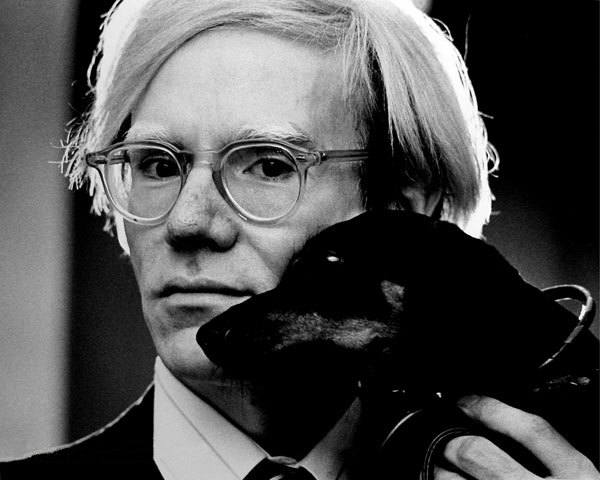
Andy Warhol is the best artist for sale on Kooness and r ead the more about Warhol'south underground cinema on Kooness
This list of forty-i influential contemporary artists has shown a glimpse of the variety and richness of contemporary art.
Thus, what is a contemporary artist? A contemporary artist is an creative person that, through their work, represents our time and reflects on the complex issues that shape our society. A lot of contemporary artists play with the boundaries of what defines an artwork; others explore political themes such as racism, sexism and power structures; many artists reflect on engineering.
What mediums do gimmicky artists use? Contemporary fine art has challenged the definition of artwork past adopting a variety of mediums. Frequently, these go beyond paintings and sculpture to include the artist's body, large calibration installations, collage and new technologies.
How do contemporary artists apply text in their piece of work? Texts are commonly incorporated in political artworks, expressing aphorisms (for instance in the cases of Barbara Kruger and Jean-Michel Basquiat) and forceful statements that strike the viewer with their wit. Artists likewise use linguistic communication in their work to exploit the immediacy of words that make an artwork accessible to people not in the fine art world, for instance in the works of Jenny Holzer and Edward Ruscha.
Cover image: Jean-Michel Basquiat, Victor 25448 (1987). Courtesy Phillips
Written past Francesca Allievi
Stay Tuned to Kooness magazine for more exciting news from the art world.
Source: https://www.kooness.com/posts/magazine/most-popular-contemporary-artists
0 Response to "Lucian Freud and Are Among the Leading Figure Painters of the Contemporary Art World"
Post a Comment